We earn a commission if you buy through our links, at no extra cost to you.
Best Riding Lawn Mower for Large Yards (2+ Acres)
How to choose a riding mower for 2 acres or more: deck width and mowing-time math, zero-turn vs tractor, battery kits vs gas, and three models that fit.
At a glance
For 2 or more acres of open ground, choose the EGO Power+ Z6 ZT5207L if you want a battery zero-turn, since EGO claims up to 4 acres per charge, a ceiling that real mowing may not reach. The EGO Power+ Z6 ZT5216L claims up to 3 acres, and the Craftsman Z5400 is the gas option, rated by Craftsman for up to 2 acres.
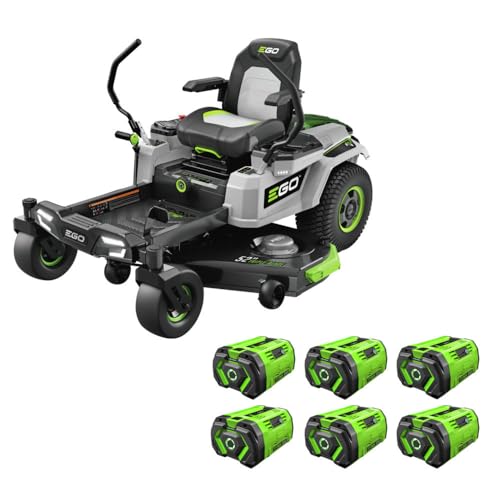
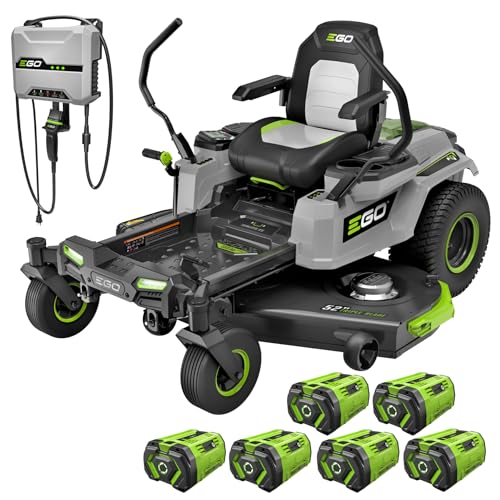
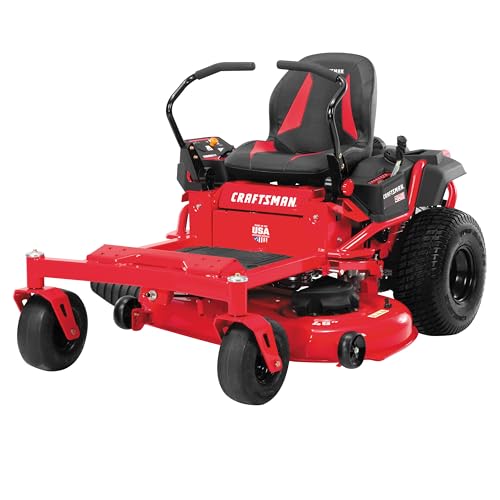
Once a property passes two acres, a mower is no longer a convenience. It is a time budget. A mower rated for a smaller lot will still cut your grass, but it may take hours longer, wear faster and leave you refueling or recharging mid-job. This guide covers the math of mowing time, the choices that matter on big open ground, and the three models from our ranking of the best riding lawn mowers of 2026 that suit a 2-acre-plus yard.
How Many Acres Per Hour Can a Mower Cover?
A simple formula gives a rough idea of mowing time. One acre is 43,560 square feet. A mower covers its deck width times the distance it travels, and one mile per hour is 5,280 feet per hour.
Illustrative math, not a product claim. A 52-inch deck is about 4.3 feet wide. At 5 mph (26,400 feet per hour) it sweeps about 114,000 square feet per hour, or roughly 2.6 acres per hour in theory. A 46-inch deck, about 3.8 feet wide, at the same speed sweeps about 2.3 acres per hour. A 42-inch deck, 3.5 feet wide, sweeps about 2.1.
Real mowing is slower than that. Overlapping passes, turns, trimming around trees, gates and stops all cut the number. If you assume you keep about 70 percent of the theoretical figure, the 52-inch deck at 5 mph works out to about 1.8 acres per hour, and the 46-inch deck to about 1.6. On that basis, a 4-acre property could take about 2-1/4 hours with the wider deck and about 2-1/2 hours with the narrower one. Change the speed, the efficiency or the layout and the numbers move with them.
Two takeaways follow. First, deck width matters more than it seems, since 6 extra inches adds up to real time saved over a season. Second, speed is limited by grass conditions and terrain long before it is limited by the machine, so a high top speed on a spec sheet does not automatically shorten your mow.
Deck Width: Why 46 to 52 Inches Is the Sweet Spot
Below 42 inches, a mower is built for small and medium lots, and the number of passes grows quickly on big ground. Above 52 inches, machines get harder to fit through gates, store in a standard shed or haul on a trailer. For most owners of two to five acres, 46 to 52 inches balances speed against practicality. Measure your narrowest gate before you shop, because the deck width on the spec sheet is not the same as the machine’s overall width with a discharge chute.
Zero-Turn vs Lawn Tractor on Open Ground
A zero-turn steers with two lap bars, each controlling a drive wheel, so it can pivot in place. Around trees, garden beds, fence posts and play equipment, that means fewer trimming passes. Craftsman and EGO both describe zero-turn steering on the models below.
A lawn tractor uses a steering wheel and pedals. Many owners find it simpler to learn and more familiar. On very open ground it is usually a bit slower because turns are wider. Craftsman’s T2400 and T2200K use a Turn Tight design with a steering wheel, but Craftsman recommends them for lawns up to 1-1/2 acres, which is below this guide’s range.
Zero-turns reward smooth movements and need extra care on slopes and wet grass, because steering works through drive-wheel speed. The Consumer Product Safety Commission says that slopes are a major hazard for riding mowers, and advises clearing debris from the lawn before you mow. Practice at low speed on flat, open ground before your first full mow.
Battery Kits vs Gas on a Large Property
Battery kits. The EGO Z6 models ship with six batteries and replace the engine with electric motors. According to EGO, there is no oil, spark plug or air filter to maintain. The trade-off is energy. EGO’s claims are up to 4 acres per charge for the ZT5207L and up to 3 acres for the ZT5216L, and both are best-case figures. If your property is close to the claim, you may need extra batteries or a recharge break. EGO lists about 4 hours to charge the ZT5207L’s six 12.0Ah batteries with the included charger. Charging also needs a power outlet near where you store the mower.
Gas. A gas mower such as the Craftsman Z5400 refuels in minutes and can keep going as long as you have fuel. The trade-off is routine upkeep: oil, filters, spark plugs and fuel care. The CPSC advises refueling only when the mower is off and cool, and keeping gasoline in a safety container.
For a property of 2 to 4 acres, both approaches work. Choose a battery kit if low maintenance and quiet matter most and your mowing fits within a charge. Choose gas if your property is near or past the limit of the battery claim, or if you prefer quick refueling.
Towing and Attachments
Large properties often mean carts, spreaders and mulching or bagging gear. Craftsman lists a hitch with the Z5400 but does not state its type or rating. EGO’s page for the ZT5207L gives no tow rating for the mower itself. Bagger kits, mulch plugs and mulching blades are sold separately for the EGO models, according to EGO, and Craftsman offers an optional mulching kit for the Z5400. Check the operator’s manual before you buy any attachment.
Our Picks for 2+ Acres
EGO Power+ Z6 ZT5207L: Most Battery Capacity
A 52-inch battery zero-turn with six 12.0Ah batteries, and the largest per-charge claim among the models we cover: up to 4 acres, according to EGO.
The ZT5207L is the choice if you want to avoid gas and have several open acres. EGO lists a 10-gauge fabricated steel deck, 10 cutting heights from 1.5 to 4.5 inches, a top speed of 8 mph and a 15-degree slope note under ideal conditions. Charging takes about 4 hours with the included charger, according to EGO. EGO’s page carried a “Coming Soon” label when we looked, so confirm what is in the kit on the Amazon listing. Read the full EGO Z6 ZT5207L profile.
EGO Power+ Z6 ZT5216L: A Few Acres, Fewer Published Details
A 52-inch battery zero-turn with six 10.0Ah batteries and an EGO claim of up to 3 acres per charge. A fit for a few open acres.
The ZT5216L has the same deck width as the ZT5207L but smaller batteries and a lower acreage claim. EGO lists a color display, EGO Connect app support, an IPX5 weather rating and three drive modes. EGO’s page does not publish a slope rating or a charge time, so check the manual if those matter. Our ZT5216L profile lays out how it differs from the ZT5207L.
Craftsman Z5400: The Gas Zero-Turn for 2 Acres
A 46-inch gas zero-turn with a 22 HP Kohler twin that Craftsman says can mow up to 2 acres, for owners who prefer quick refueling.
According to Craftsman, the Z5400 has dual hydrostatic transmissions, a 4.5-inch maximum cut height and a 3-year limited warranty. It sits at the lower end of this guide’s range, so if your property is well past 2 acres, the EGO ZT5207L offers more headroom on paper. Craftsman’s page does not list top speed, weight or slope limit. See the Craftsman Z5400 profile for the details.
When Two Acres Calls for More Than a Residential Rider
A residential rider is built for weekend use, not daily work. Consider a larger or commercial-grade machine if mowing takes a large part of a weekend, if acreage runs well past the maker’s claim, or if you cut rough, uneven ground. Extra batteries and a second charger can stretch a battery model, and a wider deck can cut mowing time, though a bigger machine is harder to store and transport.
A Short Checklist Before You Buy
- Measure your gates and the shed door.
- Estimate acreage and compare it with the maker’s claim, then leave a margin.
- Decide between batteries and gas based on upkeep and refueling.
- Check for a published slope limit and read the operator’s manual.
- Confirm what is in the box on the Amazon listing, including batteries and charger.
Sources
Frequently asked questions
What size riding mower do I need for 2 acres?
A deck of 46 to 52 inches is a sensible starting point, and a zero-turn layout helps on open ground. Several residential tractors are rated by their makers for up to 1-1/2 acres, so at 2 acres or more look for a model whose maker states a larger figure, such as Craftsman's 2-acre claim for the Z5400.
Is a zero-turn or a lawn tractor better for a large yard?
On open, mostly level ground a zero-turn usually finishes sooner because it pivots around trees and beds instead of making wide turns. A lawn tractor uses a steering wheel, which many owners find easier to learn. If the property has slopes, read the operator's manual for the limits before choosing either type.
Can I trust the acres-per-charge claim on a battery mower?
Treat it as a best case. EGO states up to 4 acres per charge for the ZT5207L and up to 3 acres for the ZT5216L, but tall, wet or hilly grass and higher speeds use more energy. Plan for a recharge or extra batteries if your property sits near the claimed figure.
How long does it take to charge a battery riding mower?
Only the maker's figure is reliable. EGO lists about 4 hours for the ZT5207L with its six 12.0Ah batteries and the included charger. EGO's page for the ZT5216L does not publish a charge time, so check the manual or the Amazon listing.
Can a large-yard mower tow a cart or spreader?
Craftsman lists a hitch with the Z5400 but gives no type or towing rating, and EGO's ZT5207L page gives no tow rating for the mower. Read the operator's manual before hooking up any attachment, and never exceed the stated limit.
When does a big property need more than a residential rider?
When mowing takes much of a weekend, when acreage runs well past what the maker claims, or when you cut rough fields on a schedule. At that point consider a larger deck, extra batteries, or a commercial-grade machine from a dealer.